Electronic Resources Management: Identifying issues and improving them

A few weeks ago, we decided to do away with one of our ERM system (with management blessings). Let’s call this system “X”.  After all these years, “X” has served its purpose but not effectively as we have hoped for.  We are now looking for alternatives.  Whether this would be an open source or commercial system would be another issue.

Being curious, I decided to trawl the scholarly articles for information on ERM systems and implementation.  Here’s some that I got so far:

  • Enoch, T. (2014). Preparation is Key: Lessons Learned from an ERM System Implementation. The Serials Librarian, 66(1-4), 182-188. doi:10.1080/0361526x.2014.877276
  • Mi, J., & Wang, Y. (2013). Implementation and Application of CORAL: An Open Source ERM System. Collection Management, 38(1), 75-79. doi:10.1080/01462679.2012.730493
  • Hartnett, E., Beh, E., Resnick, T., Ugaz, A., & Tabacaru, S. (2013). Charting a Course through CORAL: Texas A&M University Libraries’ Experience Implementing an Open-Source Electronic Resources Management System. Journal of Electronic Resources Librarianship, 25(1), 16-38. doi:10.1080/1941126x.2013.760402
  • England, D. (2013). We Have Our ERM System, It’s Implemented: Why am I Still Going Here and There to Get the Information I Need? The Serials Librarian, 64(1-4), 111-117. doi:10.1080/0361526X.2013.760148
  • Silton, K., & LeMaistre, T. (2011). Innovative Interfaces’ Electronic Resources Management System: A Survey on the State of Implementation and Usage. Serials Review, 37(2), 80-86. doi:10.1080/00987913.2011.10765355
  • Taylor, D., Dodd, F., & Murphy, J. (2010). Open-Source Electronic Resource Management System: A Collaborative Implementation. The Serials Librarian, 58(1-4), 61-72. doi:10.1080/03615261003623039

Before I proceed further, I felt it is also more beneficial for the team to focus on the existing systems, workflows, procedures and policies pertaining to electronic resources management.  Why? When we understand how things currently work, we may see ‘hidden’ issues.  Issues that are not visible to the naked eye.  Things that have slipped through the cracks.

These issues could be lurking somewhere within the main phases of ERM such as:

  • Trial and Feedback mechanisms
  • License Agreements negotiations
  • Technical Feasibility
  • Access implementation
  • Troubleshooting / Triage

One of things that I intend to do is to go back to the drawing board.  Working with stakeholders and staff in charge of the various ERM stages.  That’s where delegating leadership comes in 🙂

One of my main areas that I need to have a close look would be access implementation.  This would involve working with the Metadata team.  Since we have migrated to our new AZ management system and Summon Discovery layer, we need to identify that obsolete processes / procedures and implement new ones wherever possible.  Workflows and procedures have to be updated and staff brought up to speed.

At the same time, we started implementing RDA.  Thus the team needs to be aware of the changes and keep tabs of issues during this transition period.  They need to be aware of the differences between AACR2, RDA as well as the MARC21 .  Not only are we cataloging print items, but being a digitally-born library, more and more of our resources are in electronic format.  The team needs to be ready when initiatives to digitally store home-grown items into our system get mandated.

On another note, one of my ‘pet’ areas is troubleshooting electronic resources issues.  I’m glad to say that we have moved from using email system to a more dynamic platform – LibAnswers. Previously, issues tend to get lost in the email Inbox jungle.  With introduction of LibAnswers, things have become more streamlined.  I’m not going in depth right now to touch on the benefits of LibAnswers but perhaps at a later time.

Identifying the main issues / patterns of electronic resources would be crucial in my work.  When we can identify them earlier, things can be nipped in the bud.  Furthermore, being proactive is much better than reactive.  How we can push information to our users so that they are empowered to solve the issues themselves 🙂

Having good relations with publishers / vendors are also important.  Those tech guys are usually helpful and responsive to our inquiries.  Always there to provide assistance.

This is the just the beginning of the journey. Stay tune.

Highway 6

Does it take a long time to learn something new? Not necessarily so ..

Wanted to share this vid on learning a new skill and practicing it.  By the way, I got this from my son’s Grade 2 teacher 🙂  I had the chance to watch it and I would like to recommend to those who want to pick up new skills / expertise to try this method out.

Video entitled – “The first 20 hours – how to learn anything” by Josh Kaufman.  Some of the points he mentioned:

  • Set aside 45 mins each day to practice it consistently for a month or so
  • 4 simple steps to rapid skill acquisition:
    • Deconstruct the skill: Decide exactly what you intend to do, look into the skill and break it down into smaller and smaller pieces
    • Learn enough to self-correct: Eg: Refer to 3 to 5 books, DVD titles etc but don’t use those as procrastination ‘tools’. Learn just enough that you can practice and self-correct / self-edit.
    • Remove practice barriers – Stay away from TV, Internet, etc
    • Practice at least 20 hours – There are frustration barriers.  Commit to practicing at least 20 hours. Stick with practice to reap what you sow.
  • Barrier to skill acquistion > Its Emotional NOT Intellectual. Feeling scared, feeling stupid … but if we put that practice hours ….

There you go. I’m gonna try this and see how it works.  Let see:

  • Learn a new language (Arabic) .. i’m still rusty
  • Learn the nifty features of Adobe Photoshop
  • Get MS Excel skills to Intermediate level

and the list goes on ….

Hopefully this has benefitted you in one way or another. Good luck trying. And Thank you Josh for the encouraging TED talk.

Ramadan – KAUST 2016

Alhamdulillah, today, 6 June 2016, is the first day of Ramadan.  Ramadan Mubarak to all my family members, relatives and Muslim friends. May this month bring you bountiful rahmah, barakah and forgiveness. May ALLAH swt gives us good health and strength to do our ‘sawm’ and ibadah.   Ameen.

For my non-Muslim friends, here are some useful links about the holy month of Ramadan:

Last night, the Terawih prayers started in the Grand Mosque (KAUST):

Also noted that the dates are starting to ripen …

Other useful sites:

Visit to NCSU Hunt Library, NC

One of highlights of my TRLN Management Academy (2015) was the library visit to North Carolina Hunt Library.  This library has won several honors and awards.  2 things that struck me was the book bot as well as the various types of seating available to the library users.

NCSU Book Bot video

Here are some of the 80 different types of seatings plus other interesting ones in the library for their library users. Awesome 🙂 Most recently, Hunt Library won the award – the 2016 National Medal for Museum and Library Service.

Nth Carolina State Hunt Library

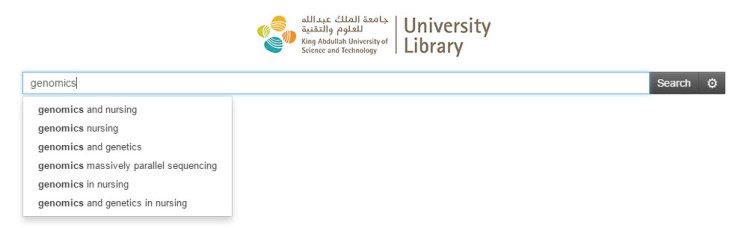
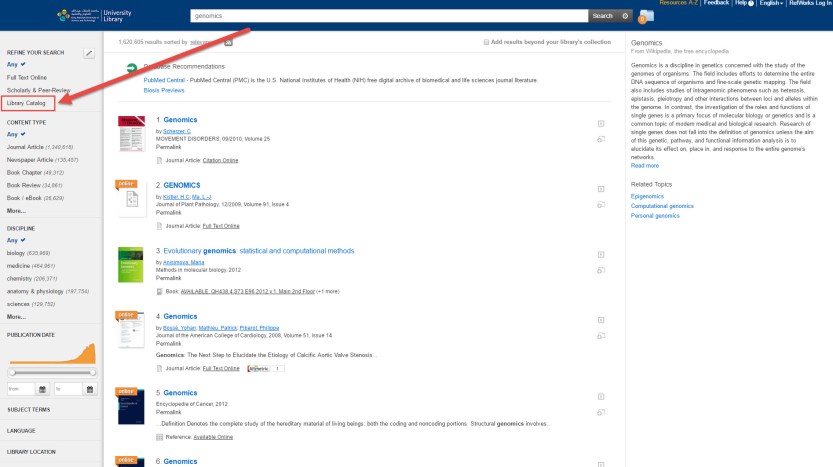
Summon is now LIVE

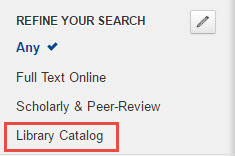
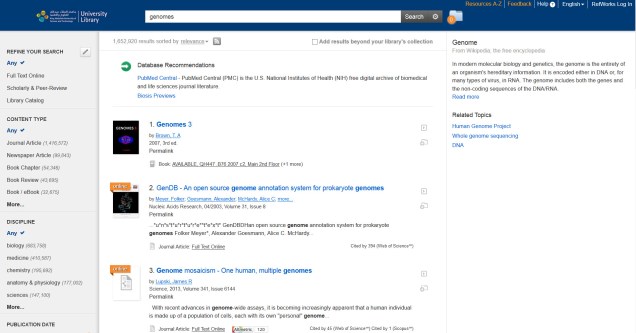
At last, our new discovery service, Summon, has been launched (softly).  After all the hard work, discussions and aspirin / panadol(s),  I’m proud to say that Summon is officially live and kicking.  Now, the after-implementation works begin:

  • Communicating the new service to users
  • Receiving feedback from users
  • Marketing and branding
  • Educating researchers, faculty members, staff, students and the larger community

I’m hopeful that this would be a major milestone in KAUST library.

Thanks to the management team, the project team , library staff and all those who have in one way or another contributed to the successful roll-out of the discovery service.

searchboxsum_results

On top of that, I’m also looking forward to the release of our new library website.  HooYah!

Foody stuff

Once in a while, the family would taste the sumptuous local food available in neighboring Tuwal.  Tuwal is a little village just outside of KAUST.  One of our favourite dishes: Bukhari Rice with Grilled Chicken.  1 packet of rice and 1 packet of chicken would be sufficient for 5 of us, Alhamdulillah.


Library Trends: Leading into the Future Workshop

December 11 - Bright Futurehttps://flic.kr/p/q67Qig

Attended a recent workshop in Doha, Qatar, entitled:  Library Trends: Leading into the Future.  This workshop was organized by LIAQ (Library and Information Association, Qatar) and the Mortenson Center, University of Illinois at Urbana-Champaign.

My takeaways:

I enjoyed the workshop thoroughly.  Covered interesting topics such as examining current trends in the library field (such as mobile computing, makerspaces, open access, MOOCs etc), conducting personal SWOT analysis,  various evolving roles of librarians and libraries in the future among others.

Doing my personal SWOT analysis is an eye opener.  I realized that there are several points for me to improve and seek opportunities that would be beneficial for me.  A stark reminder that I’m so absorbed in work that I didn’t had the time to take a step back and retrospect and introspect.  This personal knowledge audit allowed me to be critical of myself while keeping the findings private 🙂  The workshop also touched on creating a personal Personal Development Plan (PDP).  This plan outlines the short, mid and long term plans for area and activities for my career development.

Groupwork included identifying library audiences,  their expectations, role and outcome. For example, in a Graduate Research University Library, one of our important stakeholders is the faculty members.  We need to be able to identify their expectations, for example, accessing scholarly electronic resources without hassles.  In this instance, the role of the library is to provide access to electronic resources whether they are available as a subscription or open access via various devices such as computers, handheld devices, laptop, mobile devices and so forth.  (without any geographical restrictions).  The outcome would be higher level of usage of our electronic resources, justifying the subscription expenses.  Hopefully, this would assist our faculty members to produce high quality research.

We also discussed the top trends identified in the IFLA Trend Report:

  • New technologies
  • Online Education
  • Privacy and Data Protection
  • Hyper-connected societies
  • Global Information Environment

(Riding the Waves or Caught in the Tide?)

In addition to that, we reflected on United Nations Agenda 2030 and how libraries can align their contributions to this agenda.  Thought about reducing the carbon footprints, energy saving initiatives (like auto-off for computer monitors and so forth.

UNAgenda2013
United Nations Agenda 2030 (Taken from website)

Dr Clara Chu (Director of Mortenson Center) mentioned that the future roles of librarians would be:

  • Sentry: Ensuring that information available is of highest quality
  • Evaluator: Assist users to make better decisions by recommending relevant information
  • Filter:  Sieve the good information from the bad information.
  • Certifier: Be truthful in providing the data for users.
  • Aggregator / Synthesizer:  Combine the various sources for users to see the bigger picture
  • Organizer:  Organize information to make more meaningful sense
  • Network Node:  Connect dots. Facilitate networking opportunities for our users.
  • Facilitator: Make users to understand their objectives and help them achieve their targets.

(taken from prentation slides)

Useful Links:

Library Trend Reports:

Sharing: Why video games shouldn’t freak parents out — ideas.ted.com

Read this article and found it interesting, especially when you have an 8 year old boy who’s into PS3 🙂

An advocate for educational video games realizes that our kids might actually learn more from Civilization, Minecraft, Call of Duty and World of Warcraft. Everything changed at a lunch with the legendary game designer Sid Meier. For years, I’d been making the case that we should borrow from the games kids love to create new kinds of…

via Why video games shouldn’t freak parents out — ideas.ted.com