Dealing with unmanageable stuff

Access

How do you deal with something that is not easy to manage? By this, I mean issues related to the excessive or systematic download of the library’s subscribed electronic resources materials.

A little background to this:  Libraries sign license agreements with electronic resources publishers to ensure that users do not violate or infringe any copyright regulations.    In addition, we also have to ensure that there are no ‘crawling’ activities – our users do not deploy some form of software to download multiple documents within a very short period of time.  So, when any of these happen (excessive / systematic downloading), it will trigger an automated access block on the suspected campus IPs from the publishers.  Thus, users are not able to access that particular electronic resources.

The last few weeks have been pretty busy with a spike of such incidents.  I had to liaise with the publishers to ensure that our access is reinstated as well as assuring that we will investigate the matter thoroughly on our end.  In addition, I have to contact our counterparts – campus IT Security Team.  Once we have identified the ‘perpetrators’, my next task will involve contacting them and ensuring that they are NOT to repeat the ‘act’ again. (if they are guilty of it)

We have been very proactive in ensuring that our users are well-informed about these issues.  Some of our initiatives include:

  • Announcement on our library website
  • Email blast
  • Posters at strategic places on campus such as campus diner, congregation areas in the library
  • Library trainings
  • Electronic Billboards
  • Informal meetings / chats with our users on this issue
  • Re-visiting our license agreements and renegotiating with the electronic publishers

Hopefully, we can reduce the number of such incidents; though eradicating them would be rather tough.  Like I said before, sometimes when it rains, it pours …


KAUST Library Day 2016

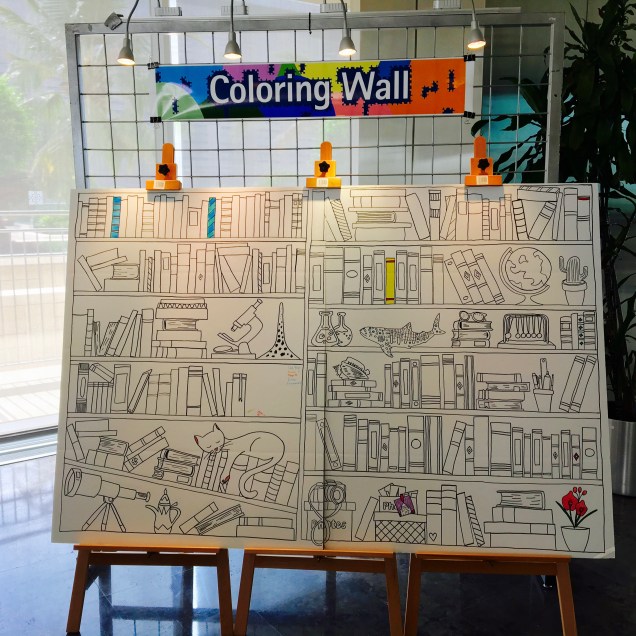
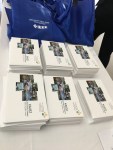
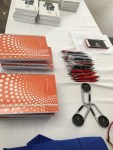
It was a day of ‘bonding’ between the library and our community. Hosted people from different Research Centers, Core Laboratories, and Academic Division.  They were asking questions about our services, facilities, and our new discovery layer.  We had raffle draws, library quizzes, “Name the Discovery Layer” (aka search service) competition, library tours and our very own “coloring wall”.  One of the main prize giveaways was the “solar-powered  Bluetooth speaker”. Oh, not forgetting the fabulous food too.

Library Posters and Facts Chart

img_5985

People that made it happened!

img_5938

The coloring wall before it was colored 🙂

Teamwork in Diversity. Is it possible?

TeamworkSource:  https://flic.kr/p/uF5bB1

I lead a team of people from different countries, cultures and faiths.  Working in such environment presents challenges as well as opportunities.  There is not a one size fits all solution to overcome these issues.

How do I get those individuals from different walks of life to come and work together to achieve a common goal despite all our differences.

Then I stumbled upon this interesting article in Forbes:

“Diversity Is Required To Make A Company Strong, But Unity Is Required To Make A Company Successful”, Amy Rees Anderson , http://www.forbes.com/sites/amyanderson/2016/10/06/diversity-is-required-to-make-a-company-strong-but-unity-is-required-to-make-a-company-successful/#79e21f87618c   (Accessed on 12 Oct 2016)

The article brought up several useful points:

3 things to create unity:

  • Tolerance
  • Learn the points of views of others
  • Appreciate differences

Coming back to the idea of teamwork, yes -it’s possible to have a successful diverse team but the main point will be Unity.  I’ve added some points to ponder:

  • Building trust
  • Keeping your word
  • Providing your support
  • Fair treatment
  • Everybody is important in the team no matter how small or big your title or job scope

Well, this list could go on and on … but to summarize, all of us have to put our differences aside at some point, check our egos, agree to disagree and keep moving forward, bearing in mind our common vision and mission within the organization. Uh one more thing, at times your patience will be tested.


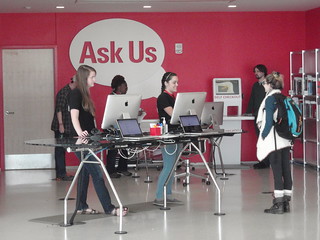
the Reference aka Information Desk

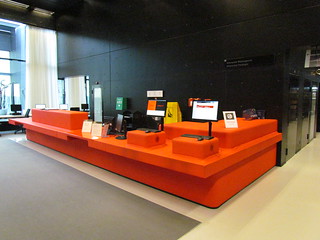
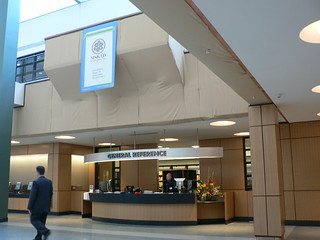
The Reference / Info Desk is a focal point in any academic / public / special libraries.  It’s one of the places where you see long queues of students / faculty / visitors waiting for their turn to inquire on library collections / services / and so forth. (Though in this technology-driven era, you don’t get to see these quite often).

I’m not going to discuss in depth about what are the things that user(s) often ask at the desk.  It’s the design of the Reference Desk that intrigues me.  Out of curiosity, I ‘flickred’ and got some photos:

PA300414     Reference desk on the upper floors

New Shapiro reference desk     General Reference desk

For those of you that have an account with Pinterest, check out this board: Information Desks.

Untitled

Information Desk, Tokyo

Everyone has their own taste, their own preference of a Reference / Information Desk. Here’s mine:

  • Located near the entrance of the library; that’s where most traffic occurs
  • Visually appealing to the eyes (subjective; beauty in the eyes of the beholder)
  • Desk height: Not too high
  • Catchy signage – perhaps with a tagline as well
  • Electronic Tickler
  • Two-way screens so that the user is able to follow the staff explanation
  • Seats for our users
  • A detachable side table that is also adjustable

On top of that, I believe that it’s time to change the one in mine.


PokemonGo and Libraries

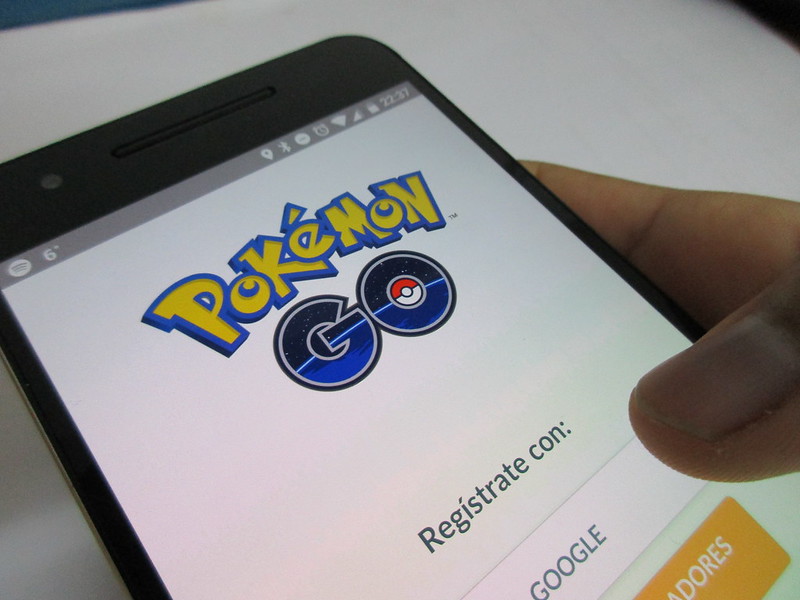
Pokémon GO

How did these 2 entities get along together? Beats me.  I searched on the web to check on libraries who have used PokemonGo to attract users (i think) to catch those Pokemon characters in the libraries.  Some libraries even have lib guides on them.  Take a look at these examples from:

It’s interesting to see people walking around in libraries with their mobile devices catching all those characters.  I’m not a fan or one of those hunters.  Really.  I don’t even know the Pokemon Go characters.  (My daughters have been trying to explain all those characters to me).

Others may shun this activity in the library especially when you have users studying for their final examinations or users ‘resting’ (sleeping) in the library.  Perhaps, this provides an opportunity (outreaching initiatives perhaps) to expose to our community on services and facilities in the library.

Whatever the reasons, it is interesting to see this ‘phenomenon’.  So if you find library users using mobile devices walking around in the library, they could be either looking for a book or Pokemon(s) or on social media ….


IP Registry

Got to know this from one of my colleagues. Looks promising. For my Electronic Resources peers who are interested to find out more about this, check their website:  IPRegistry.org

One of the benefits:  “make it easier for libraries to communicate any changes in their authentication details to all publishers who sign up to use the service, saving them significant time and reducing errors. The registry already contains 1.5 billion validated IP addresses for over 60,000 content licensing organisations worldwide.” Taken from their news release .

Hope this helps.

Make up / Break up Letters

Love

Source: Flickr.com

No, I’m not referring to the mushy and lovey dovey letters.  It’s one of those tools deployed to obtain feedback from our library users.  The feedback that can make you cringe or jump for joy.  Yeap.   It struck me that this could be a useful tool in gathering inputs from our users. Fast and cheap.  I googled and got a few interesting sites :

I also stumbled upon several library websites that utilize online survey forms (like SurveyMonkey) or developed their own in-house forms to elicit feedback from their users.  Another popular method includes writing it down on a piece of paper.  But whatever form they come in, there are several important questions that we need to address: what do we do with the feedback.  Do we act upon them? Do we just throw it into the rubbish bin? Do we thank the user? Do we reward them? (esp for writing an honest  break-up letter) Do we tabulate all the data and create a table and chart showing the most important area of concern?

At the end of the day, libraries are here to serve the community.  We need to know what attracts them to our library (physically and virtually) – niche areas?  Take a step back and look from their perspectives.  We may be doing something that doesn’t add any value to them (users) but ignoring things right under our noses that they are clamoring for.   After all, what are libraries without our users.


Congrats, NCSU Library

Just read an article in Library Journal:

James B. Hunt Jr. Library | New Landmark Libraries 2016 Winner .

Reminded me of my visit to the library back in 2015.  Awesome.  Had the opportunity to attend the library orientation.  Was shown around the various areas, services and unique features of the library.  I still haven’t forgotten the number of seat types in the library as well as the enormous book bot.

Here’s a link to my blog post on my visit.

Congrats NCSU Library.

Get fit in the Library

Cycle while you charge (your devices).

Here’s how the machine looks like: It’s placed strategically in the cafe area.  So, grab your fav coffee, read a book and work out those muscles.

IMG_3828[1]

Adjustable Comfy seats and bicycle pedals:

IMG_3830[1]

The 4 USB connectors are all located underneath. Cables provided by the library; just ask for it.

IMG_3829[1]

Check out your performance at the end of the session.

IMG_3831[1]


Electronic Resources Management: Identifying issues and improving them

A few weeks ago, we decided to do away with one of our ERM system (with management blessings). Let’s call this system “X”.  After all these years, “X” has served its purpose but not effectively as we have hoped for.  We are now looking for alternatives.  Whether this would be an open source or commercial system would be another issue.

Being curious, I decided to trawl the scholarly articles for information on ERM systems and implementation.  Here’s some that I got so far:

  • Enoch, T. (2014). Preparation is Key: Lessons Learned from an ERM System Implementation. The Serials Librarian, 66(1-4), 182-188. doi:10.1080/0361526x.2014.877276
  • Mi, J., & Wang, Y. (2013). Implementation and Application of CORAL: An Open Source ERM System. Collection Management, 38(1), 75-79. doi:10.1080/01462679.2012.730493
  • Hartnett, E., Beh, E., Resnick, T., Ugaz, A., & Tabacaru, S. (2013). Charting a Course through CORAL: Texas A&M University Libraries’ Experience Implementing an Open-Source Electronic Resources Management System. Journal of Electronic Resources Librarianship, 25(1), 16-38. doi:10.1080/1941126x.2013.760402
  • England, D. (2013). We Have Our ERM System, It’s Implemented: Why am I Still Going Here and There to Get the Information I Need? The Serials Librarian, 64(1-4), 111-117. doi:10.1080/0361526X.2013.760148
  • Silton, K., & LeMaistre, T. (2011). Innovative Interfaces’ Electronic Resources Management System: A Survey on the State of Implementation and Usage. Serials Review, 37(2), 80-86. doi:10.1080/00987913.2011.10765355
  • Taylor, D., Dodd, F., & Murphy, J. (2010). Open-Source Electronic Resource Management System: A Collaborative Implementation. The Serials Librarian, 58(1-4), 61-72. doi:10.1080/03615261003623039

Before I proceed further, I felt it is also more beneficial for the team to focus on the existing systems, workflows, procedures and policies pertaining to electronic resources management.  Why? When we understand how things currently work, we may see ‘hidden’ issues.  Issues that are not visible to the naked eye.  Things that have slipped through the cracks.

These issues could be lurking somewhere within the main phases of ERM such as:

  • Trial and Feedback mechanisms
  • License Agreements negotiations
  • Technical Feasibility
  • Access implementation
  • Troubleshooting / Triage

One of things that I intend to do is to go back to the drawing board.  Working with stakeholders and staff in charge of the various ERM stages.  That’s where delegating leadership comes in 🙂

One of my main areas that I need to have a close look would be access implementation.  This would involve working with the Metadata team.  Since we have migrated to our new AZ management system and Summon Discovery layer, we need to identify that obsolete processes / procedures and implement new ones wherever possible.  Workflows and procedures have to be updated and staff brought up to speed.

At the same time, we started implementing RDA.  Thus the team needs to be aware of the changes and keep tabs of issues during this transition period.  They need to be aware of the differences between AACR2, RDA as well as the MARC21 .  Not only are we cataloging print items, but being a digitally-born library, more and more of our resources are in electronic format.  The team needs to be ready when initiatives to digitally store home-grown items into our system get mandated.

On another note, one of my ‘pet’ areas is troubleshooting electronic resources issues.  I’m glad to say that we have moved from using email system to a more dynamic platform – LibAnswers. Previously, issues tend to get lost in the email Inbox jungle.  With introduction of LibAnswers, things have become more streamlined.  I’m not going in depth right now to touch on the benefits of LibAnswers but perhaps at a later time.

Identifying the main issues / patterns of electronic resources would be crucial in my work.  When we can identify them earlier, things can be nipped in the bud.  Furthermore, being proactive is much better than reactive.  How we can push information to our users so that they are empowered to solve the issues themselves 🙂

Having good relations with publishers / vendors are also important.  Those tech guys are usually helpful and responsive to our inquiries.  Always there to provide assistance.

This is the just the beginning of the journey. Stay tune.

Highway 6