In every organisation—academic, corporate, or public service—we celebrate awards as markers of success. They validate hard work, energise teams, and offer a moment of pride. Yet beneath the shine lies a deeper question worth asking: What truly creates meaningful impact—recognition, or the value we deliver?
Over time, I’ve come to realise that while awards are encouraging, they are not the core of progress. Value is.
Awards Are Moments; Value Is Momentum
Awards serve an essential purpose. They highlight achievements, raise visibility, and boost morale. For teams doing excellent work, an award can feel like well-deserved applause. But the effect is often short-lived. Once the event ends and the certificates are filed away, work continues—and people look for what comes next.
Value, on the other hand, doesn’t fade. It accumulates. When we introduce a service that solves a real problem, improve a system that eases someone’s day, or build an initiative that strengthens a community, it leaves a lasting mark. These contributions shape culture and reputation far more deeply than a single accolade ever could.
Value Builds Trust and Credibility
Stakeholders—whether students, colleagues, partners, or leadership—remember value. They remember the times you showed up, simplified a process, provided clarity, shared expertise, or built something that changed their experience for the better.
When value is consistent, trust follows. And trust is a currency no award can buy.
Recognition Should Be a By-Product, Not the Purpose
There’s nothing wrong with aiming for excellence that may eventually be recognised. But the pursuit of awards alone can lead teams to prioritise optics over outcomes. In contrast, focusing on value keeps us grounded in purpose.
When we work from a mindset of contribution—solving real needs, improving people’s lives, strengthening systems—recognition becomes a natural by-product. And when it comes, it carries more weight because it reflects genuine impact.
A Forward-Looking Mindset
As we navigate increasingly complex challenges in our professions, it’s worth anchoring ourselves in what endures. Awards may celebrate a chapter, but value shapes the entire story.
If we commit to delivering meaningful outcomes, supporting our communities, and continuously improving how we work, we build a legacy that lasts far beyond any trophy or plaque.
In the end, the most powerful recognition comes not from ceremonies, but from the people whose lives are better because of the value we created.
Disclaimer
The views expressed in this post are personal reflections drawn from professional experience and are shared for thought leadership and discussion purposes. They do not represent the official position, policies, or views of any institution, organisation, or affiliated entity. References to awards or recognition are not intended to diminish their value, but to encourage a broader conversation on sustainable impact and long-term value creation.
Have you ever wondered about the unsung heroes of our libraries? Those enthusiastic souls who eagerly help our users, organise shelves, and keep our spaces running smoothly? Yes, you guessed it right – the incredible student assistants! 📚🌟
In this blog post, I’m diving into the world of student assistants and their invaluable contributions to our libraries. Get ready to discover the magic they bring to our daily operations.
The Heartbeat of Our Libraries
Picture yourself in a bustling library, where books are constantly checked in, users are curious and seeking answers, and shelves are continually organised to maintain order. Our student assistants provide their invaluable expertise and enthusiasm, going above and beyond to assist patrons in preserving the liveliness of the library atmosphere and ensuring that our libraries continue to flourish.
Why Student Assistants Matter
It’s not just about shelving books or staffing the front desk. Student assistants infuse fresh perspectives, creativity, and a deep connection with the student body. They bridge the gap between staff and patrons, making our library a welcoming hub for learning and exploration. They are our eyes and ears – providing helpful feedback.
Unveiling the Insights
Curious about what the research says? Here’s a curated list of articles that delve into the significance of student assistants in libraries:
Mestre, L. S., & LeCrone, J. M. (2015). Elevating the Student Assistant: An Integrated Development Program for Student Library Assistants. College & Undergraduate Libraries, 22(1), 1–20.
Benjamin, M., & McDevitt, T. (2018). The Benefits and Challenges of Working in an Academic Library: A Study of Student Library Assistant Experience. The Journal of Academic Librarianship, 44(2), 256–262.
Folk, A. L. (2014). How Well Are We Preparing Them?: An Assessment of First-Year Library Student Assistants’ Information Literacy Skills. College & Undergraduate Libraries, 21(2), 177–192.
STANFIELD, A. G., & PALMER, R. L. (2010). Peer-ing into the information commons: Making the most of student assistants in new library spaces (M. Bowler, Ed.; Vol. 38, pp. 634–646). Emerald.
Keyes, K., & Dworak, E. (2017). Staffing Chat Reference with Undergraduate Student Assistants at an Academic Library: A Standards-Based Assessment. The Journal of Academic Librarianship, 43(6), 469–478.
Rex, J. A., & Whelan, J. L. A. (2019). The undergraduate that could: Crafting a collaborative student training program. College & Undergraduate Libraries, 26(1), 19–34.
Becker-Redd, K., Lee, K., & Skelton, C. (2018). Training Student Workers for Cross-Departmental Success in an Academic Library: A New Model. Journal of Library Administration, 58(2), 153–165.
Vassady, L., Archer, A., & Ackermann, E. (2015). READ-ing Our Way to Success: Using the READ Scale to Successfully Train Reference Student Assistants in the Referral Model. Journal of Library Administration, 55(7), 535–548.
Brenza, A., Kowalsky, M., & Brush, D. (2015). Perceptions of students working as library reference assistants at a University Library. Reference Services Review, 43(4), 722–736.
Hupe, M., & Van Keuren, L. (2020). Tracking student assistants’ work at Dahlgren Memorial Library: The tools you’ll need. Journal of Access Services, 17(4), 165–175.
Chan, K. P., Colvin, J. B., Vinyard, M., Leach, C., Naumann, M. A., & Stenis, P. (2015). Libraries Across the Sea: Using a Virtual Presence and Skilled Student Assistants to Serve Students Abroad. Journal of Library Administration, 55(4), 278–301.
Goss, H., & Decker, E. N. (2022). Replacing staff with students to monitor LibChat service: transition process and lessons learned. Reference Services Review, 50(3/4), 419–431.
Altman, S. (2017). Truly Getting to Know the Students: Benefits of Being a Library Assistant While Studying for an MLIS Degree. Knowledge Quest, 45(5), 8.
DeZouche, E., & Santos, D. (2023). Shifting to a high impact practice-centered student worker staffed research desk: a Hispanic serving institution perspective. Reference Services Review, 51(2), 218–229.
Gonnerman, K., & Johnson, K. (2016). Peer reference assistants in a small liberal arts college: case study. Reference Services Review, 44(3), 292–308.
My Take
I’ve had the privilege to work with some fantastic student assistants who have left an indelible mark on our library. Their dedication, fresh ideas, and willingness to learn have enriched our team in ways I couldn’t have imagined.
Nurturing Learning Beyond Books
Student assistants are more than just helping hands; they are catalysts for enhancing the overall library experience. Engaging with patrons, answering queries, and assisting in research endeavours, they bridge the gap between library resources and students’ needs. This engagement isn’t just transactional; it’s a genuine connection that fosters a sense of belonging within our library community.
Empowerment through Responsibility
One of the remarkable aspects of having student assistants is the empowerment it brings them. As they take charge of various responsibilities, from organising collections to aiding in technology support, they acquire skills beyond the library’s walls. These experiences sow the seeds of leadership, commitment, and collaboration, setting them on a path of professional growth.
Fresh Perspectives and Innovation
Student assistants infuse our libraries with a dose of fresh perspectives and innovation. Their proximity to the student body allows them to bring insights that might go unnoticed. By tapping into their ideas, we create a relevant and exciting space for our patrons. This collaboration between seasoned professionals and budding talents enriches our libraries in ways that traditional approaches might miss.
Building a Community
A library isn’t just a repository of books; it’s a community of learners and seekers. Student assistants contribute significantly to this sense of community. Through their interactions, they create an environment where patrons feel comfortable seeking assistance, engaging in discussions, and exploring new horizons. This nurturing atmosphere would be the same with their genuine enthusiasm.
A Call to Recognition
In this era of rapid technological advancement, it’s easy to overlook the profound impact of human interaction. Student assistants remind us that, at the core, our libraries are spaces for people – spaces where connections are forged and lives are transformed. Their dedication, diligence, and commitment deserve recognition and appreciation.
Let’s Celebrate Them
So, the next time you walk past a student assistant shelving books or assisting a user, remember the immense value they bring to our libraries. Let’s celebrate these budding library professionals who are our helpers and partners in creating a vibrant and dynamic library experience.
In prep for fall semester, our UX team is sorting out and visualizing who will be involved in what. We've got a lot going on, so this was a really helpful activity! pic.twitter.com/EbhywnsCTj
Saw this tweet recently. Inspired to know how UX / User Experience can be put into practice to help us in distributing workloads and tasks. Visualizations can help us see things better compared to listing it all in text format. Have you thought of something similar at your workplace?
1. Researchers struggle between ease of use and authoritative information. 2. Researchers highly mistrust online resources due to prolific misinformation. 3. The full breadth and depth of library resources are not easy to see. (Excerpt from article)
“Over the past year or so, I’ve started to see new ‘customer experience’ job titles (like Chief Customer Experience Officer and Deputy Director of Customer Experience) pop up in libraries that have been present in the consumer space for some time. Makes sense. Having someone focus on how people use your products and services across …”
One of my fav topics: Customer Service and Serving our library community.
I am especially drawn to the point on mapping out user journeys. Wouldn’t it be interesting to know where our users like to congregate? Perhaps, that they are using our group study rooms more than buying a cup of coffee at the library cafe? What about the quiet study areas – how often do our users go to this area during the examination periods? How long are our users staying in the study carrels? Do we need to revamp certain areas to suit the ever chaning needs of our demanding users? Sigh – the never ending list of questions ….
I am pencilling this as something to do in the near future. It would be great to have some cognitive maps of our library users. Here’s an interesting site by Prof Donna Lanclos: http://www.donnalanclos.com/tag/cognitive-maps/
I was asked this question by someone. Here’s my personal take on this:
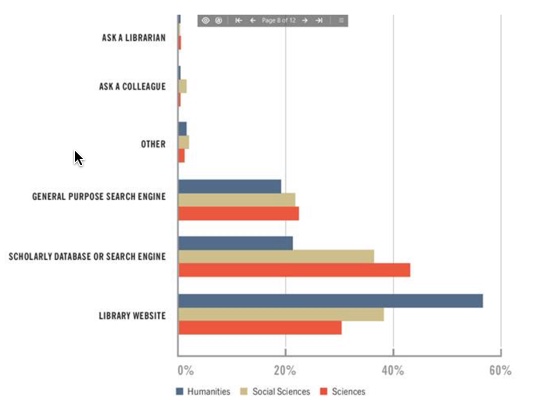
We cannot deny the pervasiveness of Google / Google Scholar usage among academics and researchers. One of the enticements of Google Scholar is the simplicity of the search box. However, if we take a look at Discovery Products such as Summon, EDS, Primo and OCLC’s discovery layers, most of them are intertwined with the library homepages. Most if not all libraries infuse the discovery layer into their search box on their homepage. Compare our library’s Summon Start page: http://koral.summon.serialssolutions.com and our library homepage. Both are using the same Summon ‘search engine’ but different interface. How libraries design their website could have an impact on the use of these discovery layers. Another factor: How well are they marketing their ‘product’? This may sway their preferences of using Google Scholar than Discovery layers.
Coming back to the question: why academics and researchers still prefer Google Scholar? Are we referring this on a general basis or specifically our university academic and research community? Also, we need to categorize them (acad and research into the various subjects: Humanities, Social Sciences, and Sciences). There was a study by Ithaka that showed humanities group uses the library website more often compared to the Soc Sciences and Sciences. Turn the tables around, Humanities uses less search engine compared to soc sciences and sciences.
Based on my small focus group study on our university community, I noted that there was a mixture of feedback. Some were unaware of the search capability of KORAL (for example the search result facet etc). Some prefer to use to Google Scholar to search because its faster and many are accustomed to this. I had one who thought that KORAL only searches library information. It all depends on one’s preferences. When it’s ingrained in them, it will take an effort to make them move them out of their comfort zone.
Think about MP3 players. They do the same thing but Apple still has a big share.
I conclude that whether its discovery layer, Google Scholar or databases, libraries would need to cater to the various search nuances of our users. We can assist by providing complimentary tools to assist users in achieving their information need. At the end of the day, our users are mostly interested to get their hands on an article, ebook chapter, conference proc, books etc …. We can provide the various platforms.
To give another analogy: User need to get a choc bar at the grocery shop. There are various options to get it: ask someone to buy for them; go to the grocery shop either by taking a bus, walking or running or even cycling there and buy it. The ultimate aim is to get that choc bar. We cannot force them by using a certain pathway but we can provide them with viable alternatives.
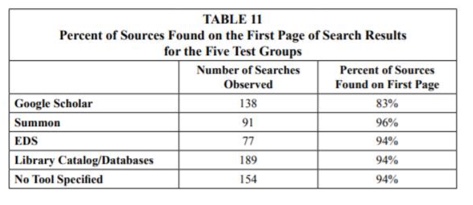
Anyways here are some interesting articles: http://crl.acrl.org/index.php/crl/article/view/16327/17773
Paths of Discovery: Comparing the Search Effectiveness of EBSCO Discovery Service, Summon, Google Scholar, and Conventional Library Resources
Excerpt from article:
“Library directors are increasingly recognizing that discovery does not and should not always happen in the library. Compared to the 2013 survey results, fewer library directors believe that it is important that the library is seen by its users as the first place that they go to discover content, and fewer believe that the library is always the best place for researchers at their institution to start their research. The share of respondents who agree that it is important that the library guide users to a preferred version of a given source continues to decrease.”
One of my projects for this year is to conduct Summon After-Implementation study. Summon is our new web discovery layer which was implemented in May 2016. This study involved interviewing our community namely: Faculty members, PhD and MSc students and PostDoc. One of the main objectives of this interview exercise is to obtain information on how they are using Summon to search for electronic resources. In addition to that, I asked for their recommendations on improving their search experience.
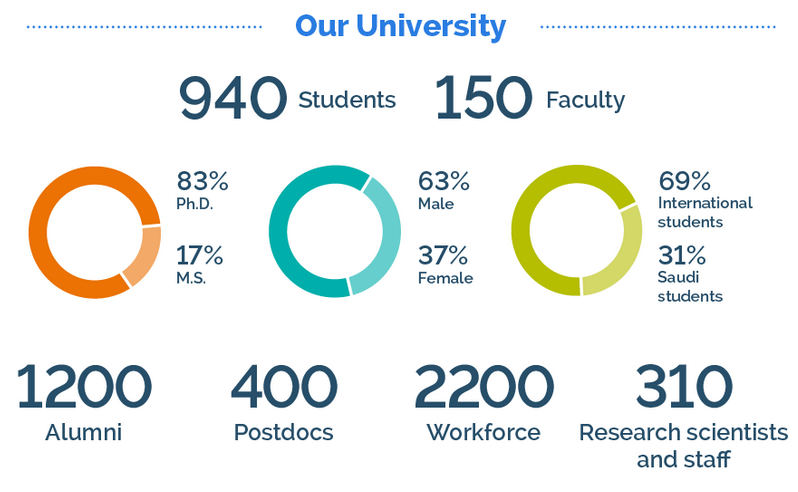
Quick Information about our International Graduate Research University:
Google Scholar is the go-to source for articles. According to the participants, they obtain more relevant and faster (search return speed) hits compared to using Summon
Most of the participants searched for articles as compared to ebook / ebook chapters when using Summon
Use Summon to search for library’s print or electronic books collection. An interesting comment: Google Scholar is not efficient enough to provide this information for them. ** Imagine if Google Scholar is able to do this 🙂
Participants found that the search results in Summon are often too cluttered; giving rise to information overload. Most of them are also unaware of the filter features that allow participants to filter out the ‘noise’ from their search results.
The search result return speed is another cause for concern (Summon). Perhaps a more directed search approach would assist our users to get their information faster. We could have tab / radio button options on our website to allow our users to search for articles; ebook / ebook chapters and print / AV materials separately.
Though some of the participants mentioned that they have attended our library training, there is not much evidence whether this has impacted their search experience in Summon. (Another potential research topic 🙂 ).
Those are just some of the main points garnered from the interviews. Any peeps out there willing to share their experience?
I had a frustrating time trying to figure out what went wrong with a certain banking website.
I tried logging on using Firefox and it showed a message that the site was temporarily unavailable. I assumed site maintenance as the error message was pretty vague. After several unsuccessful attempts over 2 days, I decided to contact their call center. The guy on the other line assured me that I should be able to access after 2 minutes.
So I gave it a long hour before I tried again. Still the same problem. Called the center again and this time the lady told me to switch to Internet Explorer Browser. Well, it worked BUT the minute I clicked on the button to do an online payment, the browser logged me out of the site. **shaking head in disbelief.
Then I decided to try Chrome: Voila! It worked. I gonne stick to Chrome for the time being.
Moral of the Story: Please be more explicit about the Error message. You could have informed us to switch to another browser. Talk about user experience.


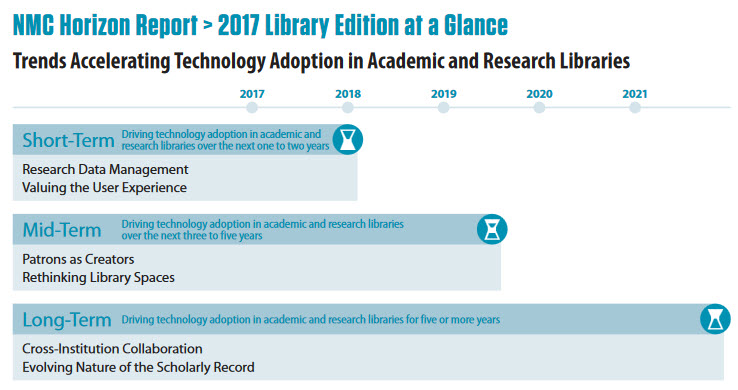 (Source: Page 3 of the NMC Horizon Report)

 Rain D Librarian