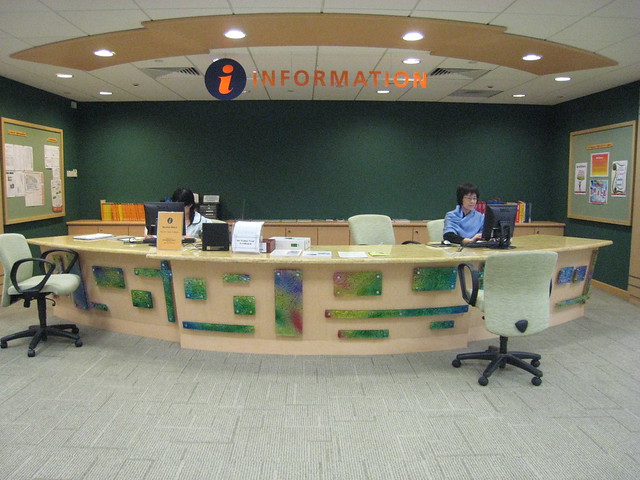
Study Visit: Technical Services, Duke University Libraries (USA) 2015

I spent a week of ‘attachment’ with the Tech Services at Duke Uni Libraries (Oct 2015).  (Thanks to my superiors for their approval).  Met a lot of wonderful people.  Thank you Beverly, Jacqui and Will for your kind hospitality.  It was a pleasure getting to know all of you as well as the other library staff.  (just too many to recall their names).

Stayed at this neat hotel:

It used to be a hospital once. Historical Information about the hotel:

The hotel was a 10 minute walk to the Library Technical Services offices.

The Library Office’s name: Smith Warehouse.  It used to be a tobacco warehouse but converted into offices. (Pictures Below).

Whenever I have the time, especially in the morning, I’ll scoot off to get some food at the cafe:
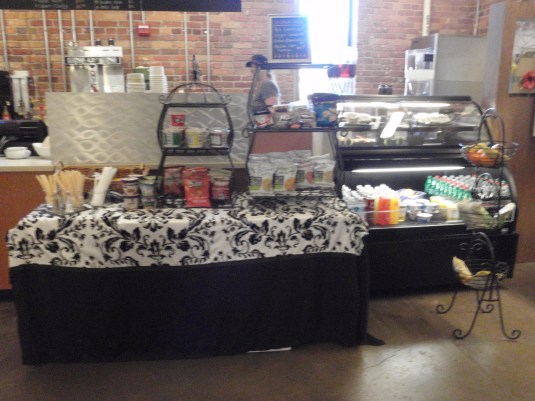
OLYMPUS DIGITAL CAMERA

And best of all, they gave me a little office 🙂
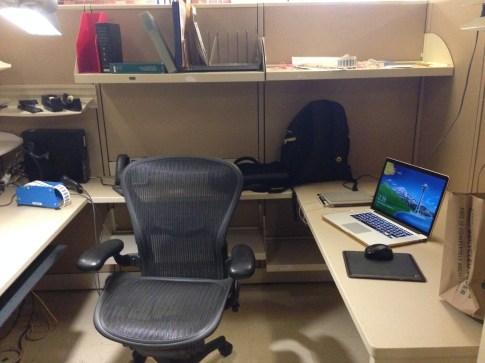
IMG_1671

During my one week attachment, I had the chance to learn more about Duke Libraries’ Tech Services handling of their electronic resources.  It was an eye-opener for me.  They have a huge collection of electronic resources.  How they are handling this is amazing.

One of my areas of interest:  Troubleshooting electronic resources.  Asked a lot of questions on the common e-resources problems, how they ‘triage’ the issues, main root causes and how to resolve them.  I got to know the systems that they are using, the procedures and so forth.

All in all, it was a worthwhile trip.

** By the way, while exploring the bookstore downtown, I saw this on the shelves:

OLYMPUS DIGITAL CAMERA

Periodicals Price Survey 2016 – Library Journal

Fracking the Ecosystem“.  Source: Library Journal

This would have an impact on libraries’ budget. Prices are rising while budget remains flat or even reduced. Periodicals prices for Science, Technology and Medical (STM) field remain one of the highest.  Worthwhile to  read especially for those involved in Collection Development and Management (Electronic Resources).

Electronic JournalSource:  https://flic.kr/p/dJkr5N

“Top Skills for Tomorrow’s Librarians”

Source:  Library Journal

Top Skills needed:

  • Advocacy/Politics
  • Collaboration
  • Communication/People Skills
  • Creativity/Innovation
  • Critical Thinking
  • Data Analysis
  • Flexibility
  • Leadership
  • Marketing
  • Project Management
  • Technological Expertise

Source: http://lj.libraryjournal.com/2016/03/featured/top-skills-for-tomorrows-librarians-careers-2016/#_

In my humble opinion, communication plays a very important part especially when you are in a multicultural and international setting.  Sometimes, certain words or connotations mean differently in different culture.

On top of that, we also need to be aware of the communication nuances especially during meetings or one-to-one conversations.  I find it very useful to learn them (c0mmunication techniques and local culture) from the locals over here.  They are ever so willing to help you understand their culture.

Reading relevant books on this topic would also be beneficial.  My pick list:

  • Culture Shock! Saudi Arabia: A Survival Guide to Customs and Etiquette by Peter North (Author), Harvey Trip (Author)
  • Saudi Arabia – Culture Smart!: the essential guide to customs & culture by Nicolas Buchele (Author)
  • Saudi Arabia Quick Guide for Expats by Jeremy D S Taylor (Author)

One of the things that resonates with me is this saying:

“The more I learn, the more I realize how much I don’t know.”- Albert Einstein


TRLN Management Academy, Chapel Hill, NC 2015

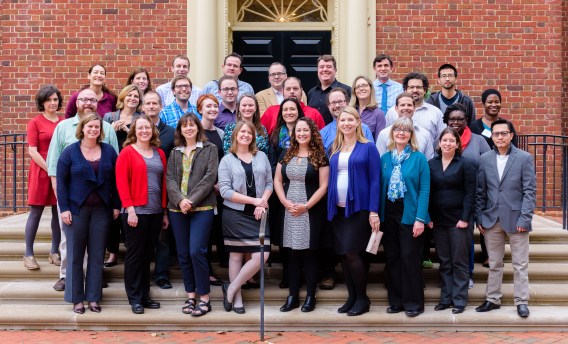
I was fortunate to be given the chance to attend the TRLN (Triangle Research Libraries Network – Duke Uni, North Carolina Central Uni, North Carolina State Uni, UNC Chapel Hill) Management Academy.  It was held at the Paul J Rizzo Conference Center (Chapel Hill, NC, USA) from 26 – 30 Oct 2015.

077-TRLN_2015
TRLN 2015 participants

This course was very beneficial to me as it opened up new insights, ideas and knowledge on leadership and management in the field of librarianship.  On top of that, it provided me with the platform to network with library professionals from North America and Canada.  (I discovered that I was the only one from outside the States).

Some of the learning objectives include:

  • budgetary processes and practices
  • leadership values as applied to library financial management
  • Leading and influencing others
  • Building effective working relationships
  • Change management
  • Project Management

Our trainers include:

  • Bob Dugan, Dean of Libraries, Uni of West Florida
  • Roger Mayer, Prof, Graduate Faculty, Management, Innovation and Entrepreneurship, North Carolina State Uni
  • Pat Wagner, Educator and Instructional Producer, Pattern Research Inc
  • Richard Blackburn, Assoc Prof, Org Behavior, Uni of North Carolina at Chapel Hill

Me and some of the important people of TRLN

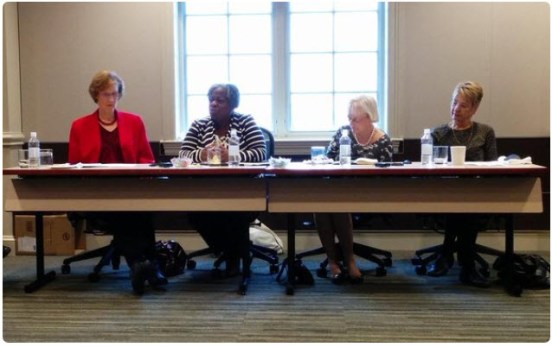
There was a panel session where participants have the chance to interact with the 4 big-wigs (directors) from the 4 uni libraries.  They include:

DirectorsPanel session with 4 library directors

  • Carolyn Argentati, NCSU
  • Deborah Jakubs, Duke Uni
  • Sarah Michalak, UNC
  • Theodosia Shields, NC Central Uni

We were also given a tour of the majestic James B Hunt Jr Library, NCSU.

NCSU, Hunt Library
Hunt Library – Book Bot

Random pictures of TRLN

Special thanks to my library director and manager for their continuous support.

Participants List and Alumni.  This was the 2015 information and application process.


Do you ‘stamp’ books for a living? (Kerja abg ‘cap’ buku ke?)

I used to get lots of questions on what I do as a librarian.  Did I ‘stamp’ due dates on books; how many ‘stamps’ did I make in one day and so forth.  At times, it made me feel like ‘stamping’ their foreheads with the book rubber stamps.  However, I realize that it’s not all their fault as librarianship wasn’t a glamorous job compared to doctors, pilots, engineers etc.  Furthermore, back then, there was not much publicity about this profession.

facepalmSource:  https://flic.kr/p/eAcKKB

I had to explain to them that some of my major tasks back then revolved around these activities:

  • answering questions whether via email/in person/phone from our users
  • assisting users in their research process
  • manning the Reference Desk, alone (for almost 4 hours either in the morning or afternoon)
  • conducting training sessions for students/staff/lecturers
  • maintaining the library’s website
  • exploring new technologies
  • learning how to use electronic databases
  • assisting users on how to search and retrieve relevant results from these databases
  • promoting library resources: ‘roadshows’, poster exhibitions, thematic books displays etc
  • conducting freshmen orientation

We were also made to

  • shelve books to get a sense of how the books were arranged
  • initiate projects to improve workflows/procedures within department
  • do volunteer work
  • conduct research and write papers
  • sit in committees

Fast forward 20 years, my responsibilities have evolved.  Not all have changed though.  I still handle questions coming in from emails/phone calls/in person.  Sometimes, I do conduct training sessions for faculty members, students and researchers.  I shall elaborate these changes in my upcoming posts.


Where I am presently …

It has been 7 years since I started working here.  I enjoyed every moment of my time living and working in this wonderful place.  Provided me with opportunities to grow in my career.  Met people from different walks of life.  Shared experiences, joy, tears and laughter with them (esp my working colleagues).  There was never a dull time.  Yes, there were challenges but I’ve always interpreted them differently.  Challenges can be turned into opportunities.  Opportunities present new learning points in life.  Learning points help you to know more about yourself, your environment.  You adopt and adapt to it.  “Learn, Unlearn and Relearn” – Alvin Toffler.

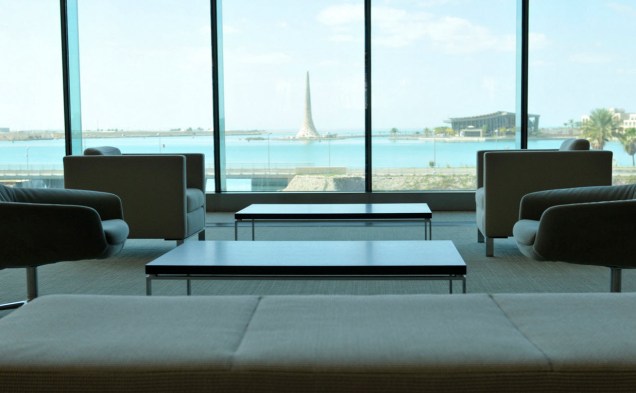
On another note, I have always love this magnificent view from the university library (that’s where I’m working presently).  Watching it from afar tend to have a relaxation / soothing effect on me.  Especially when the going gets a little tough.  The white structure in the distance is called the Beacon.

K1

Source:  http://www.kaust.edu.sa/photos.html

One of the main highlights of the KAUST library was being awarded with AIA/ALA Library Building Awards in 2011.  Some other interesting collection facts about KAUST University Library (we have another one called Harbor Library):

  • More than 300,000 electronic book titles
  • More than 50,000 scientific electronic journal titles
  • “Databases: over 30 scientific databases contains articles, citations, standards, protocols, reports, theses, videos and images”
  • Around 3,500 print titles
  • “Special collections: Red Sea coral collection; desert microbe image collection”

Source:  Facts and Figures

We are a born-digital library as what my Bosses would often declare.  Proud of it.

On top of that, our library:

  • has 3 levels; Nearly 14,000 square meters of space
  • 150 computer workstations throughout the building including two German and two Spanish keyboards.
  • Collaborative study spaces as well as Group Study Rooms
  • Copy  center
  • Cafe

(just mentioning some of the features, more information can be found here:  Facts and Figures) .  We also have our other value-added services.  Here are some pictures of the library:

That’s it for now.  I’ll share my other experiences in my next few blogs. Stay tune 🙂

Those early days … in the library

I started my career in librarianship in this library.  That was more than 20 years ago.  I remembered walking into the building, anticipating what the first day was going to be like.  I was fresh out of university and was eager to jump into the unknown.  I had read about librarianship in the newspapers and spoken to some who had worked in the library field.

Reference Desk: (Picture:  https://flic.kr/p/58Vj8z ) – a typical example.

Reference desk
One of the first thing that I was introduced to was the Reference Desk – one of the most important places in the library (besides the computer lab).  That was where my Reference and ‘People Interviewing” skills were inculcated, cultivated and developed.

One of my tasks at that time was Newspaper scanning and indexing.  I scanned our local newspapers and indexed them according to a pre-defined subject headings.  All of these were done at the Reference Desk.  Sometimes, I had users staring at me (some giving me cursory looks) as if I had nothing better to do 😛  It took me awhile to understand why they did that 🙂

Another important skill that I had to learn fast- Reference Interview.  It’s essential to know what the user needs.  Mastering this skill would help you to be more efficient and productive in handling desk/email questions.  It also helps in reducing frustration for all parties involved.  An example of user interaction at the Reference Desk:

User:  Where can I find information on  dinosaurs?
Me: Ah yes, we got lots of them in this section …. (Got up from my seat, scuttled over and grab a few books. Showed them to the user).
User: Thank you, actually, I’m looking for T-Rex .. do you have any information on them?
Me: Yeap … hold on …. (and off i went to get some more books)
User:  Aha, but I’m looking for when did T-Rex became extinct and … and ….
Me: ???

FrustrationPicture URL

Reflecting back, it would be much better for me to ask probing questions to get a better understanding.  Well, one of the those lessons in the School of Hard Knocks 🙂

I recommend these 2 books for people who would like to learn more about reference work:

On another note, it was also important to learn from the Pros.  At that time, I learned my tricks of trade from the more experienced Reference Librarians.  Those who had many years behind them in the field.  Began by asking them questions, loads of them.  Observed how they answered the questions, how they handled difficult users while keeping their dignity intact.  (You will be surprised by the questions received at the Reference Desk)  I  shadowed them.  Being humble and inquisitive were the keywords at that time.  To those who have helped me during those ‘trying’ times, I thank you. (You know who you are).


Its Nap time … in the office???

Wouldn’t it be great if we could have these in our offices?  Nap Pod

It’s good for us to recharge our “batteries” especially during or just after lunch. Some studies have shown that productivity may increase with those short power naps.  I, personally, have not tried this bit before but may be tempted to try this if they ever arrive in my office one day ….

or perhaps, we could also introduce as a value-added service to our library users.  As a graduate research university, I think our users would welcome this.  Kinda of stress reliever after a long day in the classroom or office.

Let’s see whether this could a reality one day 🙂