Sundays are important …

smile

Why? Well, the library gets the most number of questions via LibAnswers on Sundays especially between 9am- 12pm.  Most questions that the library received revolved around the electronic resources issues as well as circulation issues.

Drilling down further the e-resources issues: they are mostly related to access issues such as broken links, site maintenance, links that went to a different location altogether etc etc.

With all these data, what can the library do to improve their services:

I thought of the following:

  • Knowledge audit of library staff on Reference services. Assist those that need further help by sending them for courses/webinars/conferences.
  • Mentorship for new library staff to understand the importance of Reference work
  • Create more LibGuides to address the frequently asked questions
  • Implement other avenues of submitting questions such as social media: Twitter and Facebook

More can be found in my slides here.

Drones in my Library?

Wouldn’t it be awesome to have drones who can ‘deliver’ print books to our users on campus?  And even program the drones to collect them (books) when the due date is up.  Perhaps, the drones can even double-up as ‘security’ to patrol the library and identify any shenanigans 🙂  Reminded me of Skynet and the Terminator movies.

Thinking along that line, I decided to Google for more information and found interesting sites on the same topic:

If this is implemented here,  it would be a major milestone in the history of the library.  Then again, what would become of librarians if more and more of such drones, gadgets and AI technology are introduced?  My guess is ….


Get a ticket, wait in line and we’ll resolve your E-Resources Issue

Just completed my first draft of my paper entitled: An Exploratory study on the use of LibAnswers to Resolve, Track and Monitor Electronic Resources Issues: The KAUST Library experience.  Researched on the most common questions related to E-Resources as well as making recommendations for service improvement in this area.

brainstorm2

What I found:

  • 32% of the submitted questions are related to electronic resources issue
    • Access issues (17%)
    • Link issues (4%)
    • New e-resource title recommendations (3%)
  • Peak Months:  August – Oct as well as Jan – March
  • Most questions were asked on Sundays and Wednesdays
  • Daily Peak timings:  10am – 12pm and 2pm – 4pm.

Drill Down on Access Issues:

  • Denied access to e-resource
  • Setting up / Registration issues
  • Downloading e-journal articles / ebook chapters
  • Excessive Downloading
  • Broken Links

Turnaround time to resolve the e-resource questions:  Approx 12 hours

For further discussion(s)/suggestions:

  • To have a consistent / controlled vocabulary in tagging the questions
  • User Empowerment to resolve straightforward issues themselves.  We are creating a libguide to address this.
  • Social media integration
  • Implementing Libanswers’ Ref Analytics feature
  • Regular sharing sessions with library staff
  • Knowledge audit of library staff understanding of electronic resources

The article can be found here.

3 Lessons that I learned from Summon Implementation (Web discovery layer)

web-design

It’s almost been a year since we roll-out our library’s web discovery layer known as KORAL: KAUST Online Resources Access Layer (powered by Proquest Summon).  [Check out my earlier post on our journey to implement Summon. ]

What are the 3 main lessons that I learned?

brainstorm

(1) Management buy-in: It’s imperative to obtain management buy-in and support; without which,  things may go bumpy.  With management support, resources may be spared to aid your cause; tasks delegation made easier and fund(s) may be released to boost your project success chances.

(2) Testing(s) and Engaging the User community: I have always believed in engaging our user when implementing any public-facing interface projects.  At the end of the day, our users are the ones who will ultimately use the interface/system.  They are not at all dumb as some of us would think.  By getting their feedback, we are made to see things in a different light; some of which are those that we least expected.  Examples of some of  these user engagement activities are:

  • UX: Usability testing(s)
  • Focus Group interviews
  • One to One interviews
  • Card sorting exercises
  • Online surveys
  • Informal chats

(3) Communication: Whether you are communicating to team members, communicating upwards to library management or communicating to the users, there has to be openness and transparency.   We have to be receptive to the feedback; some may be stinging to the ears BUT if it is for the common good, then we have to put our egos aside.  At the same time, if it’s necessary to deliver some negative news, then we have to inform that as well.  However,  when dealing with negative news, there has to be tactfulness and sensitivity involved.  Not many could react well to negative information.   Most importantly, communication is always a 2-way ‘street’.  Be prepared to take as much as you are ready to give.

These are the main ones among the others that I have learned during the project implementation.

Most common inquiries received in our library’s Inbox

question

Our library uses LibAnswers to track and monitor all our library inquiries.  Inquiries received range from directional questions to complex ones such as access issues. Here are my findings on the most common questions received in the first quarter of 2017 (Jan – March 2017):

  • electronic resources questions
  • circulation and access questions

responsive

A quick breakdown of electronic resources issues:

  • access issues due to broken links, unsubscribed e-resources, outages, saving / downloading issues
  • linking issues related to link resolver services


ebook

On another note, circulation/access questions cover:

  • Users’ Log-in issues in the classic catalog
  • Missing books
  • Inability to locate print copies of book on the library shelves


tactics

These questions bring up further discussions on

  • library’s strategies on countering or empowering our users to resolve these issues,
  • training gaps of our internal library staff
  • improving our FAQs public interface

Stay tuned for more updates.


Usability Study: Interviews with our community

Interview

One of my projects for this year is to conduct Summon After-Implementation study.  Summon is our new web discovery layer which was implemented in May 2016.  This study involved interviewing our community namely: Faculty members, PhD and MSc students and PostDoc.  One of the main objectives of this interview exercise is to obtain information on how they are using Summon to search for electronic resources.  In addition to that, I asked for their recommendations on improving their search experience.

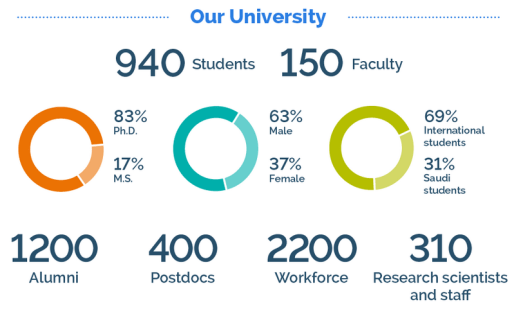
Quick Information about our International Graduate Research University:

KAUSTFact

Source:  https://www.kaust.edu.sa/en/about/media-relations#part3

Here are some quick takes:

  • Google Scholar is the go-to source for articles.  According to the participants, they obtain more relevant and faster (search return speed) hits compared to using Summon
  • Most of the participants searched for articles as compared to ebook / ebook chapters when using Summon
  • Use Summon to search for library’s print or electronic books collection.  An interesting comment: Google Scholar is not efficient enough to provide this information for them.  ** Imagine if Google Scholar is able to do this 🙂
  • Participants found that the search results in Summon are often too cluttered; giving rise to information overload.  Most of them are also unaware of the filter features that allow participants to filter out the ‘noise’ from their search results.
  • The search result return speed is another cause for concern (Summon).  Perhaps a more directed search approach would assist our users to get their information faster.  We could have tab / radio button options on our website to allow our users to search for articles; ebook / ebook chapters and print / AV materials separately.
  • Though some of the participants mentioned that they have attended our library training, there is not much evidence whether this has impacted their search experience in Summon.  (Another potential research topic 🙂 ).

Those are just some of the main points garnered from the interviews.  Any peeps out there willing to share their experience?