ERL16: Session Takeaway: Case Studies

Case Studies:  Technical Perspectives on Hosting Discovery Systems

Search!Source: https://flic.kr/p/4UokrH

Ron Burns, VP Global Software Services, EBSCO
Michael Kucsak, Director of Library Systems and Technology, University of North Florida
Jon Ritterbush, E-Resources & Serials Librarian, Univ. of Nebraska – Kearney

Michael started off the session.  His topic:  Cloud Customization: Uni of North Florida’s Implementation

  • Gave an overview of the university as well as the library’s systems and technology department org chart
  • Showed UNF online catalog: their branding schema: OneSearch.  Briefly touched on their logos, color schemes, style and subtlety
  • Explained the custom content providers in OneSearch
  • Widget:  ILS_Based Interlibrary Loan
  • Ulrichsweb: customized integration
  • OneSearch and BlackBoard – Collaboration between Library and ITS.
  • Opportunities:  Vendor collaborations, multi-tenancy, patron portal
    Boopsie, Springshare, Shibboleth, Canvas, BePress

Jon briefed the audience about:

  • Uni of Nebraska-Kearney
  • Showed via screen capture: EDS
  • Widget sidebar
  • Content from Credo, Worldcat etc (API Code)
  • Insert instructional of promotional images
  • “Ask a Librarian” Chat Widget
  • Text a Call ## – Link added to catalog records
  • Database Recommender placard
  • Shorten Link option

Ron (Ebsco) touched on Cloud concepts and definitions.  He showed the audience EbscoAdmin features and explained the advantages that cloud technologies and discovery have for libraries.  Areas:

  • User experience and expectations
  • APPS
  • API Interoperability
  • Open Source

Ron also showed the audience Ebsco Apps and Cloud services that could be added to enhance discovery layer.  Eg:  Ask a Librarian, Book Carousel, Citation Resolver, Credo Reference Search, ILL Form, Plum Group Widget, OCLC Nearby and Affiliated Libraries, MeSH suggestions, Save pdf to my cloud, Wikipedia, Twitter etc

Notes taken from presentation slides.

I had an interest in this as our library will soon be launching the new discovery interface.  Wanted to compare and contrast the features that other discovery services are offering.  Incorporate them (especially the relevant ones) into the new discovery interface wherever possible.  There are several potential features that we could implement while there are some that have already been ‘installed’.

When I got here …

This is a continuation from my previous blog:  Flashback: Time to leave home ….

My flight from Dubai – Jeddah was delayed by more than 2 hours (if I’m not mistaken) due to some technical issues.  I was too tired to roam around Dubai Airport.  On hindsight, I should have done that, given the variety of stores and food restaurants that are available.  All I did was to find a nice spot to land my butt and catch some sleep.

Dubai airportSource:  https://flic.kr/p/qBGu2z

[ the waiting ]Source:  https://flic.kr/p/7SUQMY
(One of them is NOT me)

RIMG0052Source:  https://flic.kr/p/7Z65dV

The flight took off from Dubai late in the evening, around 6pm or so.  Reached Jeddah airport some 3 hours later (sometime past 9pm). Went past immigration and baggage check.  Met up with the Uni Meet and Greet Team.  The rep gave me a temp ID and they brought me over to my Jeddah ‘residence’ – Crowne Plaza.  This was my place of stay for a few weeks before I moved into my permanent home in the University Town.

Loved the food in Crowne Plaza.  They really served excellent dishes and were generous in their servings.  Too generous even; I had to request for them to reduce the servings so as  not to waste the food.  Like to thank the University for providing me a great accommodation even though it was a temporary one.

This was the start of my adventure in the Kingdom.  Stay tune for more updates 🙂

Did you know that I can ….

fly a plane?? Nah, Just kidding 🙂 But my brother bought me a ticket (Thank you bro) to check out the Boeing Flight Simulator located at the Singapore Flyer, Singapore.  He probably wanted me to know a bit more about his work.

Back to the story:  The day was downcast. But, it didn’t dampen my spirit and enthusiasm to take the controls of a Boeing plane.  Never had a chance to do this before. (Never touched Microsoft Flight Simulator game as well).  Got to the place and waited for my turn.  We were allotted specific timings to try out the simulator.  (I cannot remember how long the flight simulator session lasted).

My turn came up and off i went into the ‘cockpit’.  I was briefed by a pilot (he went through an actual pilot school and passed out) on all the controls, knobs, display panels etc.  My head went ‘dizzy’.  There were just too many things to absorb in such a short time span.  But I noted that there were several important ones that I needed to know.  To cut the long story short, I had the chance to ‘take off’ from several airports and ‘landed’ the plane safely as well; though I’m not sure whether we had any major turbulence during the simulation 😛  One thing for certain: I’m not making any switch to the aviation industry anytime soon 🙂

My flight experience in pictures:


Where I am presently …

It has been 7 years since I started working here.  I enjoyed every moment of my time living and working in this wonderful place.  Provided me with opportunities to grow in my career.  Met people from different walks of life.  Shared experiences, joy, tears and laughter with them (esp my working colleagues).  There was never a dull time.  Yes, there were challenges but I’ve always interpreted them differently.  Challenges can be turned into opportunities.  Opportunities present new learning points in life.  Learning points help you to know more about yourself, your environment.  You adopt and adapt to it.  “Learn, Unlearn and Relearn” – Alvin Toffler.

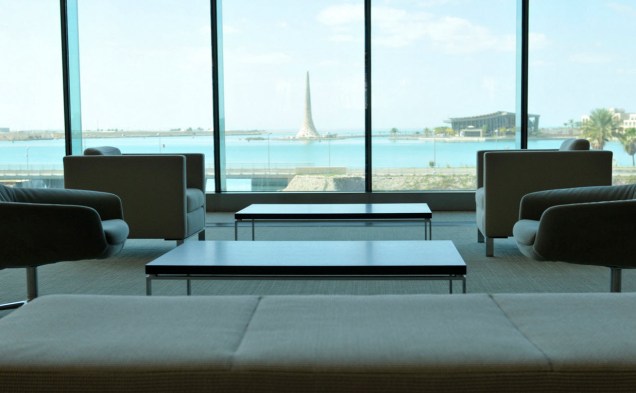
On another note, I have always love this magnificent view from the university library (that’s where I’m working presently).  Watching it from afar tend to have a relaxation / soothing effect on me.  Especially when the going gets a little tough.  The white structure in the distance is called the Beacon.

K1

Source:  http://www.kaust.edu.sa/photos.html

One of the main highlights of the KAUST library was being awarded with AIA/ALA Library Building Awards in 2011.  Some other interesting collection facts about KAUST University Library (we have another one called Harbor Library):

  • More than 300,000 electronic book titles
  • More than 50,000 scientific electronic journal titles
  • “Databases: over 30 scientific databases contains articles, citations, standards, protocols, reports, theses, videos and images”
  • Around 3,500 print titles
  • “Special collections: Red Sea coral collection; desert microbe image collection”

Source:  Facts and Figures

We are a born-digital library as what my Bosses would often declare.  Proud of it.

On top of that, our library:

  • has 3 levels; Nearly 14,000 square meters of space
  • 150 computer workstations throughout the building including two German and two Spanish keyboards.
  • Collaborative study spaces as well as Group Study Rooms
  • Copy  center
  • Cafe

(just mentioning some of the features, more information can be found here:  Facts and Figures) .  We also have our other value-added services.  Here are some pictures of the library:

That’s it for now.  I’ll share my other experiences in my next few blogs. Stay tune 🙂

Those early days … in the library

I started my career in librarianship in this library.  That was more than 20 years ago.  I remembered walking into the building, anticipating what the first day was going to be like.  I was fresh out of university and was eager to jump into the unknown.  I had read about librarianship in the newspapers and spoken to some who had worked in the library field.

Reference Desk: (Picture:  https://flic.kr/p/58Vj8z ) – a typical example.

Reference desk
One of the first thing that I was introduced to was the Reference Desk – one of the most important places in the library (besides the computer lab).  That was where my Reference and ‘People Interviewing” skills were inculcated, cultivated and developed.

One of my tasks at that time was Newspaper scanning and indexing.  I scanned our local newspapers and indexed them according to a pre-defined subject headings.  All of these were done at the Reference Desk.  Sometimes, I had users staring at me (some giving me cursory looks) as if I had nothing better to do 😛  It took me awhile to understand why they did that 🙂

Another important skill that I had to learn fast- Reference Interview.  It’s essential to know what the user needs.  Mastering this skill would help you to be more efficient and productive in handling desk/email questions.  It also helps in reducing frustration for all parties involved.  An example of user interaction at the Reference Desk:

User:  Where can I find information on  dinosaurs?
Me: Ah yes, we got lots of them in this section …. (Got up from my seat, scuttled over and grab a few books. Showed them to the user).
User: Thank you, actually, I’m looking for T-Rex .. do you have any information on them?
Me: Yeap … hold on …. (and off i went to get some more books)
User:  Aha, but I’m looking for when did T-Rex became extinct and … and ….
Me: ???

FrustrationPicture URL

Reflecting back, it would be much better for me to ask probing questions to get a better understanding.  Well, one of the those lessons in the School of Hard Knocks 🙂

I recommend these 2 books for people who would like to learn more about reference work:

On another note, it was also important to learn from the Pros.  At that time, I learned my tricks of trade from the more experienced Reference Librarians.  Those who had many years behind them in the field.  Began by asking them questions, loads of them.  Observed how they answered the questions, how they handled difficult users while keeping their dignity intact.  (You will be surprised by the questions received at the Reference Desk)  I  shadowed them.  Being humble and inquisitive were the keywords at that time.  To those who have helped me during those ‘trying’ times, I thank you. (You know who you are).


Its Nap time … in the office???

Wouldn’t it be great if we could have these in our offices?  Nap Pod

It’s good for us to recharge our “batteries” especially during or just after lunch. Some studies have shown that productivity may increase with those short power naps.  I, personally, have not tried this bit before but may be tempted to try this if they ever arrive in my office one day ….

or perhaps, we could also introduce as a value-added service to our library users.  As a graduate research university, I think our users would welcome this.  Kinda of stress reliever after a long day in the classroom or office.

Let’s see whether this could a reality one day 🙂


Why did you tear my boarding pass?

DXB – JED:  I approached Emirates boarding desk in Dubai Airport and presented my boarding pass. The lady took one glance at me, smiled and tore it up.  I was aghast.  Was about to question her … just then saw her punched a few keys into the computer, looked up at me and smiled.  “Sir, we’re upgrading you to Business Class”.  OMG.  I thanked her, smiled gleefully and proceeded to the departure lounge.  Thank you, Emirates.


ER&L 2016 Take away: Keynote session

Time Management

Keynote session:  Finding Time: From Industrial Mythology to Chronemic Literacy
Presenter: Prof Dawna Ballard.
Keyword: Chronemics:  “study of the role of time in communication”

Prof Ballard touched on the myths and realities of time management:

  • Myth 1: Better time management skills + tools will make you more productive
    Reality:  Time management not related to productivity. Pick the tool that fits your personality.
  • Myth 2:  If you love what you’re doing, it doesn’t feel like work 🙂 (BS)
    Reality:  Be wary of any language that tries to mask work as something else.
  • Myth 3:  Focusing on work-life balance will lead to greater well-being.
    Reality:  Focusing on balance can create unending frustration.
  • Consider Alignment:  Be mindful of our alignment

(notes from slides)

There have been lots of discussion on work-life balance.  Personally, I felt that it’s difficult to maintain the exact same balance.  Most likely, when you focus too much on one area, the other tends to get neglected.  We need constant check and balance in our life.  (My wife tends to check on me often 🙂 esp if I’m spending too much time in the office).  Esp during peak season, the workload can get pretty heavy and that’s when you tent to get sucked into work.  All of us will have to figure out how best we can manage our time between work and life.

Kevin Cruse, in his book, 15 Secrets Successful People Know About Time Management, mentioned about focusing on the minutes in a day.  (Wanna make a guess how minutes there are in a day?).  He suggested to do away with post-it pads and concentrate on putting important tasks on a calendar (such as Outlook calendar).  I’m guilty, at one stage, of using too many post-it pads. There were yellow ones, green ones etc all over my computer screen.  And when that’s not enough, I started pasting them on my desk as well 🙂  I have to admit that weekly calendar blocking does help me focus on my important tasks for the week as well as to reduce any unwanted disturbances.

Here are some tools that I use to manage my activities:

  • MS Outlook Calendar
  • Evernote
  • Trello
  • Slack
  • Post-It pads (yeap, old habits die hard 🙂 )
  • MS Sharepoint

All the best in managing your time and achieving work-life balance 🙂

“Give me six hours to chop down a tree and I will spend the first four sharpening the axe.” – Abraham Lincoln

ER&L 2016: Exploring UT and surroundings

I had the chance to walk around the sprawling campus of University of Texas, Austin Texas.  It was a Sunday and naturally, the whole campus was quiet.  Admired the majestic clock tower, the lawn and the greenery.  Some pics:

One of the things that caught my eye (below). Esp like the part on “Leadership:  The will to excel with integrity and the spirit that nothing is impossible.”  That can-do spirit’ gung-ho to me 🙂

P4030632.JPG

I went over to the library (Perry Castaneda Library) and saw this that struck me.  Perhaps, this could be done in front of our library.  Come to think of it – may not be feasible due to the sweltering heat in summer.  Still, we can think of something similar that could link back power into the library 🙂   Solar is in abundance back in the Kingdom.  Benefit:  Cut down the consumption of electricity & save cost.

Here are some of the Halls.  Reminded me of the ones I saw in Duke University.

Guadalupe St, Austin, TX, USA.  Loved the wall graffiti.


ER&L 2016 Workshop: Altmetrics

Collected my ER&L 2016 Conference and Workshop pass at the AT&T Center; which was just a stone throw away from my hotel.  Met Sandy, one of the conference comm members.  Exchanged pleasantries and recalled my time during ER&L 2015; which was freezing cold.  The weather now was perfect 🙂

My first workshop for the day “Understanding and Using Altmetrics for Collection Management: An Interactive Overview“.  Presenters: Robin Champieux and Stacy Konkiel. I’m a newbie to this area so I decided to get to know more what altmetrics mean and how it can affect electronic resources collection development.

Areas covered during the workshop:

  • Introduction to altmetrics
  • Altmetrics tools
  • Library’s use of altmetrics
  • How it can enhance collection development
  • Hands-on activities

Big 3 impact metrics:  Citations: Journal Impact Factor, h-index and Usage Statistics.   Some common sources of citations:  Scopus (Elsevier), Web of Science (Thomson Reuters) and Google Scholar.  As for usage stats: there is COUNTER.

(Notes from slides)

What’s Altmetrics:

  • Alternative, more immediate measure of attention (Complement source)
  • From non-traditional sources (Social media etc)
  • Provide a larger context

(Notes from slides)

How can Altmetrics help:

  • Feedback loop for self promotion
  • Evidence for tenure and promotion
  • Evidence for grant application and reporting

(Notes from slides)

Almetric Tools:

(Notes from slides)

Working in a new Graduate Research University in the Kingdom, I pondered upon some questions after the session:

  • How can altmetrics be used in collection development
  • how can almetrics complement the existing metrics
  • How do faculty members think about almetrics
  • What kind of altmetrics data that can help with collection development, exposure, highlight research
  • Importance of feedback from researchers, faculty members and students

Introduced to 2 new tools:

My thanks to Robin and Stacy for providing insights to Altmetrics

I did some research on articles related to Altmetrics, here’re some that I found: