From Millennium ERM to Proquest 360 Resource Manager: Our library’s Journey


I’ve just completed the slides for the Electronic Resources Management Systems ERMS project.  Highlighted the library’s journey to the new ERMS – Proquest 360 Resource Manager.  I recalled the 3 phases that the project went thru.  Each of them posed challenges and issues that the project team had to face head on.  Endured late but not sleepless nights.  Discussions, disagreements, and compromise.  Yes, it was hard work; at times it can be nerve-wracking but all in all, it was an enriching experience.

Do you have a Flowchart?

Lessons learned:

  • Awareness of the available ERMS in the open market. Products are constantly changing and companies merge. Staying on top of things are advantageous as the library can re-position itself in the case of any advancements/product / company mergers
  • Match the ERMS features against the team’s ERMS wish list. Before embarking on the ERMS project, conduct a study of the strengths and weaknesses of the present system. Identify what can be improved and what are the missing ‘pieces’ that should be evident in the new ERMS
  • Contact peers on their experience on using the ERMS products. Most if not all of
    E-Resources Librarians are willing to share information and knowledge. Compare notes. Sometimes, what works for them may NOT work for us.
  • Keep communication open. Ensure that library management and project team are updated on the project progress.
  • There may be hiccups/challenges along the way. Stay focus and keep calm.

Looking for more adventures on this road …..

Sundays are important …

smile

Why? Well, the library gets the most number of questions via LibAnswers on Sundays especially between 9am- 12pm.  Most questions that the library received revolved around the electronic resources issues as well as circulation issues.

Drilling down further the e-resources issues: they are mostly related to access issues such as broken links, site maintenance, links that went to a different location altogether etc etc.

With all these data, what can the library do to improve their services:

I thought of the following:

  • Knowledge audit of library staff on Reference services. Assist those that need further help by sending them for courses/webinars/conferences.
  • Mentorship for new library staff to understand the importance of Reference work
  • Create more LibGuides to address the frequently asked questions
  • Implement other avenues of submitting questions such as social media: Twitter and Facebook

More can be found in my slides here.

Get a ticket, wait in line and we’ll resolve your E-Resources Issue

Just completed my first draft of my paper entitled: An Exploratory study on the use of LibAnswers to Resolve, Track and Monitor Electronic Resources Issues: The KAUST Library experience.  Researched on the most common questions related to E-Resources as well as making recommendations for service improvement in this area.

brainstorm2

What I found:

  • 32% of the submitted questions are related to electronic resources issue
    • Access issues (17%)
    • Link issues (4%)
    • New e-resource title recommendations (3%)
  • Peak Months:  August – Oct as well as Jan – March
  • Most questions were asked on Sundays and Wednesdays
  • Daily Peak timings:  10am – 12pm and 2pm – 4pm.

Drill Down on Access Issues:

  • Denied access to e-resource
  • Setting up / Registration issues
  • Downloading e-journal articles / ebook chapters
  • Excessive Downloading
  • Broken Links

Turnaround time to resolve the e-resource questions:  Approx 12 hours

For further discussion(s)/suggestions:

  • To have a consistent / controlled vocabulary in tagging the questions
  • User Empowerment to resolve straightforward issues themselves.  We are creating a libguide to address this.
  • Social media integration
  • Implementing Libanswers’ Ref Analytics feature
  • Regular sharing sessions with library staff
  • Knowledge audit of library staff understanding of electronic resources

The article can be found here.

User Experience: “You are NOT your user”

I’ve started on our user experience interviews on the use of our new discovery service namely Summon and AZ portal.  One of the objectives is find out our users’ behavior when they search/browse our electronic resources.  Participants include:

  • Faculty members
  • Post-docs
  • Students

Being a digitally born library, our e-resources far outnumber the print collection. Therefore it is imperative for us to know how best we can align our discovery services and other added value services to meet our users’ needs.

Some Questions posed:

  • Have you used Summon / 360? If Not, why?
  • How often do you conduct your research?
  • What obstacles do you face during your research process?
  • How can we, the library, help you to make your user experience (Summon/360) better?

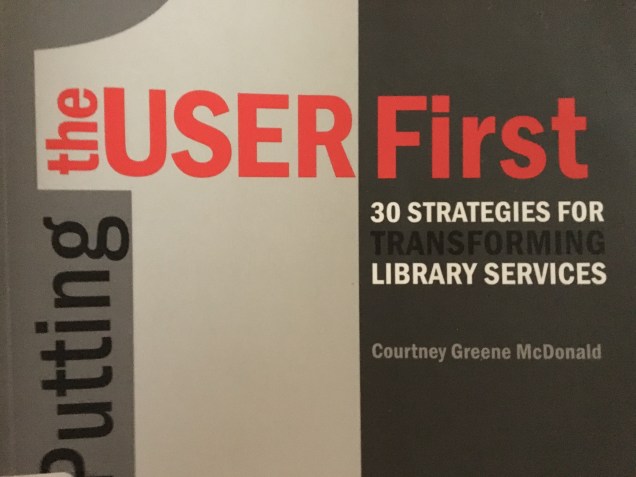
And taking a leaf from this book that I am currently reading: “You are NOT your user” – Admit it.

img_5854

PokemonGo and Libraries

Pokémon GO

How did these 2 entities get along together? Beats me.  I searched on the web to check on libraries who have used PokemonGo to attract users (i think) to catch those Pokemon characters in the libraries.  Some libraries even have lib guides on them.  Take a look at these examples from:

It’s interesting to see people walking around in libraries with their mobile devices catching all those characters.  I’m not a fan or one of those hunters.  Really.  I don’t even know the Pokemon Go characters.  (My daughters have been trying to explain all those characters to me).

Others may shun this activity in the library especially when you have users studying for their final examinations or users ‘resting’ (sleeping) in the library.  Perhaps, this provides an opportunity (outreaching initiatives perhaps) to expose to our community on services and facilities in the library.

Whatever the reasons, it is interesting to see this ‘phenomenon’.  So if you find library users using mobile devices walking around in the library, they could be either looking for a book or Pokemon(s) or on social media ….


Get fit in the Library

Cycle while you charge (your devices).

Here’s how the machine looks like: It’s placed strategically in the cafe area.  So, grab your fav coffee, read a book and work out those muscles.

IMG_3828[1]

Adjustable Comfy seats and bicycle pedals:

IMG_3830[1]

The 4 USB connectors are all located underneath. Cables provided by the library; just ask for it.

IMG_3829[1]

Check out your performance at the end of the session.

IMG_3831[1]


What does it take to work as E.R.S. over here …

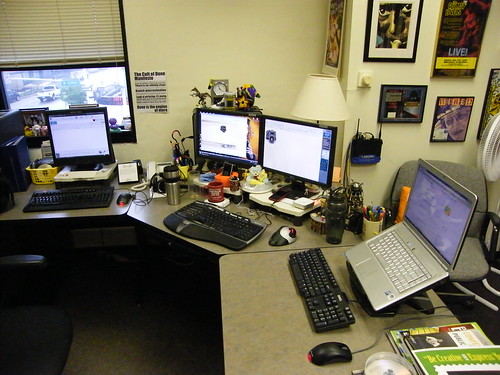
My office desk - May 2010This doesn’t look like my desk but I’m hoping to get 4 screens if possible 🙂
Source:  https://flic.kr/p/818pwN

ERS? It’s Electronic Resources Specialist. In some places, it’s also known as Electronic Resources Librarian etc.  My work deals mostly with electronic resources: electronic books, electronic journals, images and so forth.  I manage the life cycle from start to end; ensuring that trial, acquisition, access, troubleshooting and maintenance and renewal stages are completed.  I have a team of 4 (including myself).  It’s a thankless job at times; no thank you-s until someone cannot get access / download an article or chapter.

I’m not going to ramble on the competencies listed by several organizations such as NASIG (North American Serials Interest Group), UKSG (United Kingdom Serials Group) and the like.  Those are the intrinsic criterion needed.  I’ll list them down later in this blog post.  What I’m touching on are more on the ‘soft’ side of it.  For me, there are a few. They are:

  • Patience
  • Perseverance
  • Resilience

Quick check in Oxford Dictionary:

  • Patience:  “the ability to accept delay, trouble or suffering without becoming angry or upset”
  • Perseverance: “continue doing something in spite of difficulty or lack of success”
  • Resilience:  “able to withstand or recover quickly from difficult conditions”

In our work life, we have, in one way or another, face with testing situations.  In my case, it revolves around people or technology.  The technology part: that’s not that too difficult. Find the relevant manual, read it and you can get the answers.  Otherwise , you can contact the vendor techies and they are willing to check it out on your behalf.  Googling for answers would also be an alternative.

However, when dealing with humans, that can be tricky.  For example, not many would admit that they are wrong even when presented with facts.  The worst part is the “blame game”.  I believe that we can learn a lot when we readily admit our mistakes. Learn from it and move on.  Humans are never perfect.

point
Source:  https://flic.kr/p/7Fjpn

Coming back to the 3 traits, let me touch on the first one: Patience:  Leading requires patience. Mistakes happen; sometimes accidental; sometimes due to lack of knowledge.  Addressing those mistakes are important.  That’s where learning comes in: for both parties.  It provides a chance to address our shortcomings.  An opportunity for someone to learn new skills; an opportunity for someone to understand personality differences and how to navigate around it.  Win win scenario; hopefully.

The way we address these issues are also important.  Whether its one on one sessions or during team meetings, it will affect whether our message will get across.  Sometimes one to one meetings would work better than others.  In the context that I am in, I believe that having one to one ‘chats’ usually works.  Nobody likes to be mocked in public.

I do tolerate mistakes but if the same mistakes keep happening more than 2 times; that will set off alarm bells in my head 🙂  Either its a case of being incompetent or just insubordination.  Dealing with such cases require more tactfulness.

Perseverance. When the going gets tough, keep on moving, keep on striving.  For example, I encounter issues such as electronic resources sudden access disruption.  Now, the business work week in Saudi Arabia starts on Sunday till Thursday.  Imagine on a late Thursday afternoon, electronic publisher X (located in the States with business week starting from Mon – Fri) decided to pull the access plug for a particular product title ABC.  Reason: Detected excessive downloading activity.

I’ll be scrambling to get publisher X attention to inform them that we are on top of things and identifying the potential root cause.  Next, I have to make sure that our access is re-activated.  If I’m lucky, access is restored by Friday evening. Otherwise I would have to work during Friday (which is a weekend) by the way, to get it up.  If I miss it, then access would be affected till Monday afternoon when the publisher office starts work. (due to geographic time differences). Note that our work week starts on Sunday over here.

To complicate things, we may have researchers who are in need of access and who aren’t able to do so.  They may not know and do not want to know the reason why access is denied. What they want to know, when can they get access to the desired information.  In these instances, people management skills come in handy 😉

Resilience. Before taking my present job, I was previously a Reference/Subject Librarian and a Library webmaster.  Though electronic resources was not something new for me, I was faced with a steep learning curve.  I had to learn most of my stuff fast.  Sometimes you learn on the job.  On other occasion, you will rely on your intuitive and experience to get the task completed.  I had my ‘wins’ and my ‘losses’.  I faced setbacks.  Those setbacks provided a platform for me to learn and a reminder that my learning journey is never ending.

I had no mentor over here.  They expect me to hit the ground running.  Hence the expat terms 🙂  However, the support I got back then (and now) is enormous.  I’m grateful for that.  My superiors were ever willing to allow me to go for overseas conferences and trainings to complement my knowledge.

The adventure continues ….

Oh by the way, here’s the core competencies for Electronic Resources Librarian from NASIG.
 

Where I am presently …

It has been 7 years since I started working here.  I enjoyed every moment of my time living and working in this wonderful place.  Provided me with opportunities to grow in my career.  Met people from different walks of life.  Shared experiences, joy, tears and laughter with them (esp my working colleagues).  There was never a dull time.  Yes, there were challenges but I’ve always interpreted them differently.  Challenges can be turned into opportunities.  Opportunities present new learning points in life.  Learning points help you to know more about yourself, your environment.  You adopt and adapt to it.  “Learn, Unlearn and Relearn” – Alvin Toffler.

On another note, I have always love this magnificent view from the university library (that’s where I’m working presently).  Watching it from afar tend to have a relaxation / soothing effect on me.  Especially when the going gets a little tough.  The white structure in the distance is called the Beacon.

K1

Source:  http://www.kaust.edu.sa/photos.html

One of the main highlights of the KAUST library was being awarded with AIA/ALA Library Building Awards in 2011.  Some other interesting collection facts about KAUST University Library (we have another one called Harbor Library):

  • More than 300,000 electronic book titles
  • More than 50,000 scientific electronic journal titles
  • “Databases: over 30 scientific databases contains articles, citations, standards, protocols, reports, theses, videos and images”
  • Around 3,500 print titles
  • “Special collections: Red Sea coral collection; desert microbe image collection”

Source:  Facts and Figures

We are a born-digital library as what my Bosses would often declare.  Proud of it.

On top of that, our library:

  • has 3 levels; Nearly 14,000 square meters of space
  • 150 computer workstations throughout the building including two German and two Spanish keyboards.
  • Collaborative study spaces as well as Group Study Rooms
  • Copy  center
  • Cafe

(just mentioning some of the features, more information can be found here:  Facts and Figures) .  We also have our other value-added services.  Here are some pictures of the library:

That’s it for now.  I’ll share my other experiences in my next few blogs. Stay tune 🙂